
Reducing MTTR in Cybersecurity Platforms: The Role of Dedicated Monitoring Teams
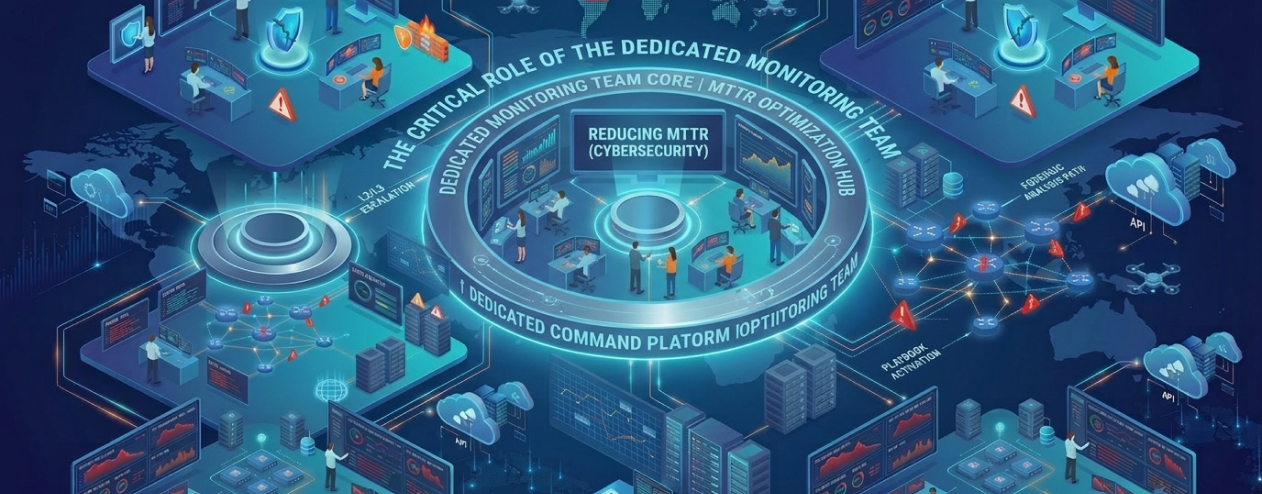
Cybersecurity platforms are built to detect threats quickly and help organizations respond before damage occurs. Yet many security products face a different challenge internally. When operational issues arise within the platform itself, incident resolution often takes longer than expected.
Performance degradation, integration failures, infrastructure issues, or service disruptions can affect the reliability of a cybersecurity product. When these incidents are not addressed quickly, enterprise customers experience delays, interrupted workflows, and reduced trust in the platform.
In such environments, reducing MTTR, or Mean Time to Resolution, becomes a critical operational priority. Dedicated monitoring teams play a key role in achieving this goal.
Understanding MTTR in Cybersecurity Platforms
MTTR measures how quickly a system recovers from an operational issue. It includes the time taken to detect an incident, diagnose the root cause, and fully resolve the problem.
For cybersecurity products, MTTR has a broader impact than typical software systems. These platforms often support real time threat detection, automated response workflows, and integrations with dozens of other security tools. If the platform experiences downtime or performance issues, it can directly affect security operations for enterprise customers.
Several factors commonly contribute to higher MTTR in cybersecurity platforms:
- Limited visibility across infrastructure, services, and integrations
- Fragmented monitoring tools that create operational blind spots
- Engineering teams being responsible for incident troubleshooting
- Lack of structured incident response processes
When these challenges exist, incidents may take longer to identify and resolve. In some cases, customers may discover issues before internal teams are even aware of them.
Reducing MTTR requires a more structured operational model.
Why Cybersecurity Product Companies Struggle with MTTR
Many cybersecurity product companies prioritize innovation, feature development, and integration capabilities. While these areas are essential, operational monitoring often receives less attention during early product growth.
As the platform scales and enterprise customers begin to rely heavily on the product, operational complexity increases. Several challenges start to appear.
Limited Operational Visibility
Cybersecurity platforms operate across distributed infrastructure, APIs, integrations, and connectors. Without unified monitoring across these components, identifying the source of an issue can take significant time.
Engineering Teams Handling Operations
In many companies, developers become the first responders during incidents. This interrupts product development and slows down both innovation and incident resolution.
Absence of Standardized Incident Workflows
Without predefined playbooks and escalation processes, teams must investigate each incident from scratch. Valuable time is spent identifying ownership, collecting logs, and coordinating across teams.
Lack of Continuous Monitoring
If monitoring is not continuous, issues are often detected only after customers report them. By that point, the incident may have already affected multiple users or critical workflows.
These operational gaps can significantly increase MTTR and impact the reliability of the platform.
How Dedicated Monitoring Teams Reduce MTTR
Dedicated monitoring teams bring structured operational oversight to cybersecurity platforms. These teams focus specifically on platform health, incident detection, and rapid response.
Their role extends across security operations, infrastructure monitoring, and site reliability practices.
Continuous Monitoring
Dedicated teams monitor infrastructure, application services, and integrations around the clock. This continuous visibility helps identify anomalies and performance issues early.
Early detection significantly reduces the time required to respond to incidents.
Faster Incident Identification
Monitoring systems are configured to detect unusual behavior, performance degradation, and system failures. Instead of waiting for user reports, incidents are identified as they occur.
This proactive approach ensures faster investigation and resolution.
Structured Incident Response
Dedicated monitoring teams follow defined incident response frameworks. These frameworks include escalation paths, response playbooks, and clear ownership models.
With structured processes in place, teams can quickly diagnose problems and initiate remediation steps.
Platform Expertise
Monitoring teams that specialize in cybersecurity platforms understand the operational dynamics of tools such as SIEM, SOAR, and XDR systems. Their familiarity with these environments helps them diagnose issues more efficiently.
As a result, organizations can achieve significantly faster incident resolution and improved platform stability.
Building an Operational Model for Faster Incident Resolution
Reducing MTTR requires more than tools. It requires a mature operational approach.
Unified monitoring across infrastructure, integrations, and application layers provides a single view of platform health. Intelligent alerting ensures that critical issues receive immediate attention while reducing alert fatigue.
Incident playbooks help teams follow consistent response procedures, enabling faster troubleshooting. Collaboration between security operations, infrastructure teams, and site reliability engineers ensures that incidents are resolved from multiple perspectives.
This operational alignment strengthens platform reliability and improves response speed.
The Business Impact of Lower MTTR
Reducing MTTR delivers measurable benefits for cybersecurity product companies.
Faster incident resolution improves platform uptime and ensures uninterrupted security operations for customers. Engineering teams can focus more on product innovation instead of operational troubleshooting.
Customers experience more reliable service, which strengthens trust and long term platform adoption.
In competitive cybersecurity markets, operational reliability becomes an important differentiator.
Reliability Is a Product Capability
Cybersecurity platforms must not only detect threats but also operate with consistent reliability. Enterprise customers expect platforms that remain available, responsive, and resilient under all conditions.
Reducing MTTR requires continuous monitoring, structured incident response, and operational expertise.
Dedicated monitoring teams transform incident management from reactive troubleshooting into a proactive reliability practice. By improving detection speed, response coordination, and operational visibility, organizations can maintain stronger platform performance and deliver a more dependable experience for their customers.
Other Blogs