- Home
- Blog
- How HRMS and Identity & Access Management (IAM) Integration Improves Employee Access Security?
How HRMS and Identity & Access Management (IAM) Integration Improves Employee Access Security?
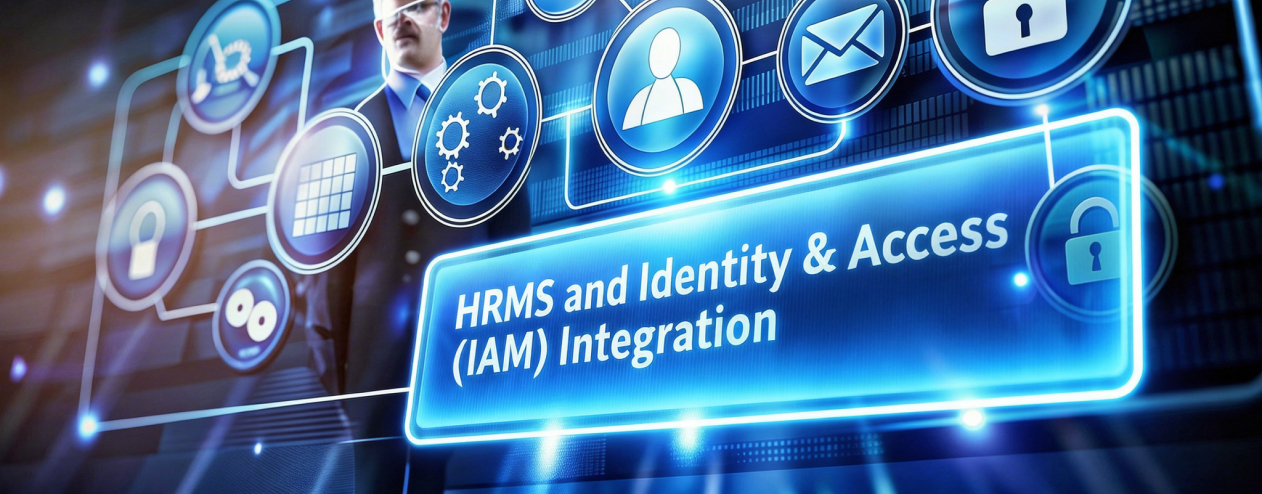
Have you ever wondered why employees sometimes have access to systems they no longer need — or worse, shouldn’t have at all?
In large organizations, managing who has access to what is far from simple. Employee movements like hiring, promotions, transfers, and exits happen constantly, and keeping access rights up to date can feel like chasing a moving target. When HR systems and security systems operate in silos, these changes can take days or even weeks to reflect — creating security blind spots.
Integrating your Human Resource Management System (HRMS) with an Identity & Access Management (IAM) solution bridges this gap. It ensures that HR’s accurate, real-time employee data directly informs IAM’s access controls — improving security, reducing risk, and keeping identity management aligned with business changes.
The Security Gaps in Traditional Workflows.
Even well-managed organizations face access-related vulnerabilities when HR and IAM systems aren’t connected:
- Delayed removal of access after employee departures – Former employees may retain access for days or weeks, leaving open doors for misuse.
- Over-privileged accounts due to manual updates – Employees often keep old permissions after role changes, leading to unnecessary access exposure.
- Inconsistent access rights across departments – Without centralized control, policies vary, and enforcement becomes patchy.
Benefits at a Glance.
- Faster, more secure onboarding – Employees get the right access from day one.
- Reduced insider threat risk – Immediate removal of access when someone leaves.
- Consistent application of security policies – Role-based permissions applied uniformly.
- Simplified compliance and audit readiness – Centralized logs and reports for regulators.
Here Is How HRMS–IAM Integration Improves Employee Access Security.
Automated User Provisioning and Deprovisioning
With integration, the HRMS sends verified role and employment data directly to IAM. New accounts are created instantly when someone joins, and access is revoked automatically when they leave — closing the dangerous gap between HR updates and IT action.
Role-Based Access Control (RBAC) Enforcement
Job role data in the HRMS maps to permission sets in IAM. This ensures employees only get the minimum necessary access — the “least privilege” principle — reducing the risk of accidental or intentional data misuse.
Secure and Streamlined Onboarding
Integration means a new employee starts their first day with all the access they need, without manual requests or delays. With Single Sign-On (SSO) tied to verified HR records, credentials are centrally managed and more secure.
Real-Time Role and Permission Updates
When employees get promoted, move departments, or change responsibilities, their access rights adjust instantly. This prevents overlapping permissions and ensures no outdated access remains active.
Compliance and Audit Preparedness
Every access change is timestamped and logged automatically. Whether for GDPR, HIPAA, ISO 27001, or other regulatory frameworks, integration simplifies audit preparation by providing clear, traceable records.
Insider Threat Mitigation
When HR changes a status to “inactive,” IAM responds immediately by revoking access. Additionally, alerts can be triggered for unusual activity tied to HR events — like a soon-to-depart employee downloading sensitive files.
Best Practices for Implementing HRMS–IAM Integration.
- Map HR job codes to IAM role policies before integration to ensure smooth role-based provisioning.
- Test automation rules in a sandbox environment to prevent unintended access grants or removals.
- Set up regular audits to validate that role-to-permission mappings are still appropriate.
- Ensure encryption for all data transfers between HRMS and IAM to protect sensitive employee information.
Sacumen Helps Product Companies Build HRMS Integrations.
At Sacumen, we build custom integrations between leading HRMS platforms—such as Workday, SAP SuccessFactors, Oracle HCM, and BambooHR—and cybersecurity solutions, including IAM, SIEM, and DLP, exclusively for cybersecurity product companies. Our expertise spans automated provisioning and deprovisioning, tailored connector development, and an API-first, security-first engineering approach that ensures encrypted, compliant, and scalable integrations. Leveraging prebuilt frameworks, we help product companies accelerate time-to-market while delivering flexible solutions that adapt to evolving enterprise workforce needs
Finally…
HRMS–IAM integration isn’t just an IT upgrade — it’s a critical security measure. By automating identity lifecycle management it eliminates risky delays, enforces least privilege, and strengthens compliance. For cybersecurity product companies, delivering such integrations can be a powerful differentiator. And with the right partner, it’s faster, more secure, and built for scale.
Other Blogs