- Home
- Blog
- Ready to Respond: Sacumen’s First Aid Preparedness Training Equips Employees for Workplace Emergencies
Ready to Respond: Sacumen’s First Aid Preparedness Training Equips Employees for Workplace Emergencies
A colleague collapses during a meeting. Someone burns a hand in the pantry. A team member feels sharp chest pain at their desk. Workplace emergencies rarely give a warning, and the first few minutes often decide the outcome. In those minutes, help usually comes not from a doctor but from the people nearby.
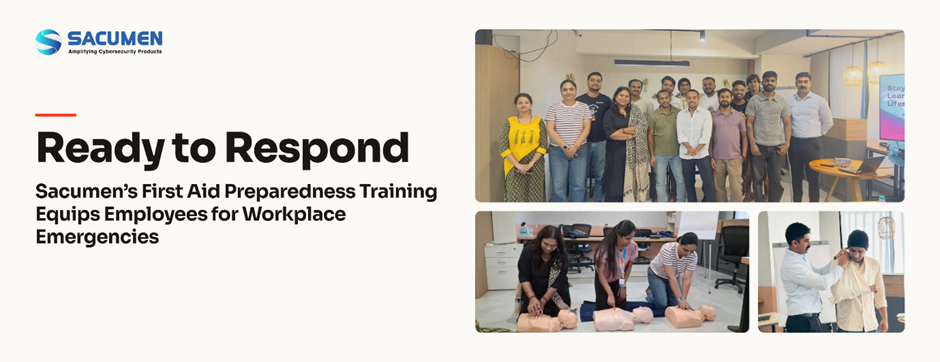
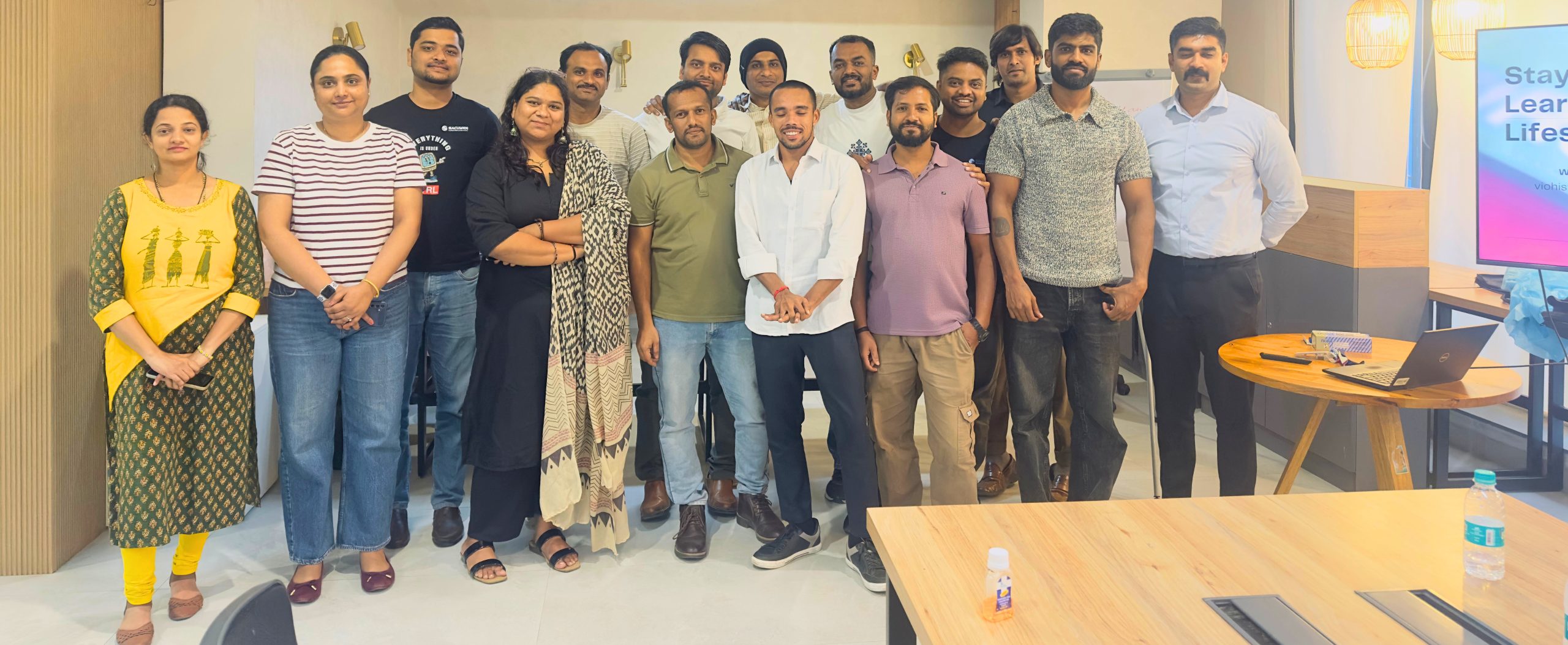
With this in mind, Sacumen took a step forward in workplace safety by organising a First Aid Preparedness Training session for its employees. The initiative reflects the organisation’s continued investment in its people, giving them the knowledge, skills and confidence to act when it matters most.
The result is a prepared team on the office floor. If an emergency happens at work, trained colleagues are ready to respond immediately, without hesitation. Here is what the session covered.
Why Workplace Emergency Preparedness Matters
In a medical emergency, professional help can take time to arrive. Until it does, a calm and trained colleague can stabilise the situation, stop an injury from getting worse and, in some cases, save a life.
For Sacumen, preparedness is part of caring for its people. When colleagues know how to respond, minor incidents stay minor and serious ones get help sooner. Every trained employee strengthens the safety net for everyone around them.
The Core Principles of First Aid
The session began with the fundamentals that apply to almost every emergency:
- Check the scene and make sure it is safe for you.
- Call for help early by dialling 112 or 108.
- Assess the person: are they responsive and breathing normally?
- Act on the priorities: breathing and severe bleeding come first.
- Stay with them until professional help takes over.
Do’s and don’ts: Stay calm, reassure the person and protect yourself with gloves or a clean cloth. Don’t give food or water to anyone unconscious or seriously injured, don’t attempt procedures you aren’t trained for, and don’t crowd the person.
Handling the patient safely: Move an injured person only if they are in immediate danger. If a head, neck or spinal injury is possible, keep the head and neck still. Place an unconscious person who is breathing in the recovery position.
Emergencies: What to Do
Different conditions call for different responses. Here is a quick guide to the emergencies covered.
-
Fainting or Unconsciousness
Lay the person flat, raise their legs slightly to restore blood flow to the brain, and loosen tight clothing. If they don’t come round but are breathing, use the recovery position; if they are not breathing normally, start CPR.
-
Road Accidents
Check for traffic, call 112 or 108, and don’t move the person unless there is immediate danger, as this can worsen spinal injuries. Leave a rider’s helmet on unless it blocks breathing, and control any heavy bleeding.
-
Cuts and Bleeding
Apply firm pressure with a clean cloth and raise the injured part. If blood soaks through, add layers on top, and never pull out an embedded object.
-
Fire Burns
Cool the burn under running water for at least 20 minutes, remove nearby jewellery and cover loosely with cling film. Don’t apply ice, butter or toothpaste, and don’t burst blisters.
-
Electrocution
Never touch the person until the power is off, or if you can’t switch off the power; move the source away with a dry, non-conducting object. Check breathing, start CPR if needed and get medical help, as a shock can disrupt the heart’s rhythm.
-
Chemical Inhalation
Don’t enter fumes without protection. If it is safe, move the person to fresh air, call for help, note the chemical involved and begin CPR if breathing stops.
-
Poison Consumption
Call for help immediately and keep the container for the medical team. Don’t induce vomiting unless advised by a professional, as some substances cause more damage coming back up.
-
Animal and Snake Bites
Wash animal bites with soap and running water, and see a doctor about rabies and tetanus. For snake bites, keep the person still, immobilise the limb and get to a hospital for anti-venom. Don’t cut the wound, suck out venom or tie a tight tourniquet.
-
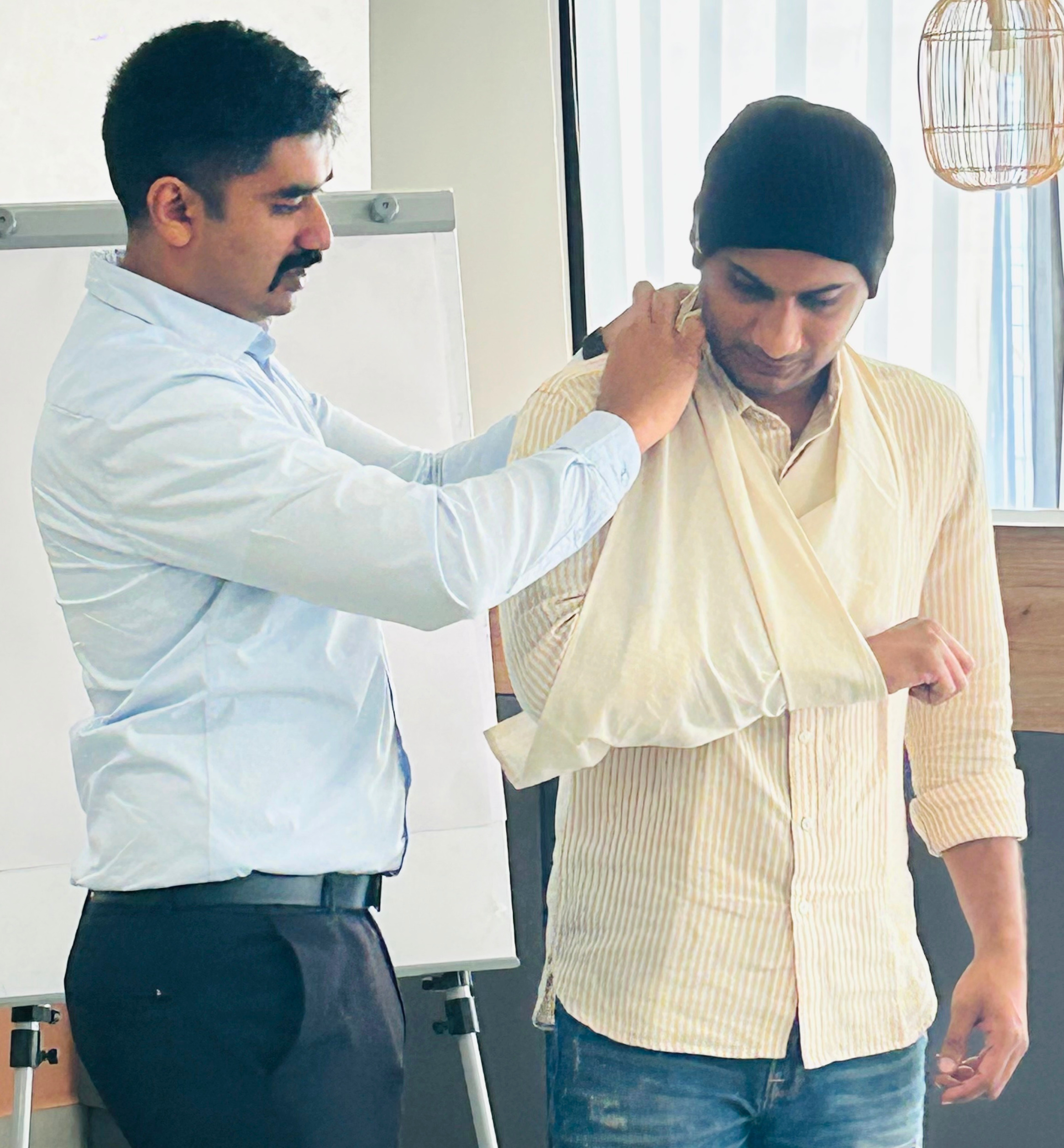
Fractures
Immobilise the injured part with a splint or sling without trying to realign it, and apply a cold pack wrapped in cloth. Cover an open fracture with a clean dressing.
-
Heart Attack and Cardiac Arrest
In a heart attack, the person is usually conscious, with chest pain that may spread to the arm, jaw or back. Keep them seated and calm, and call an ambulance. In cardiac arrest, the person collapses and stops breathing normally. Start CPR immediately and use an AED if one is available.
Before the Ambulance Arrives
The time between calling for help and the ambulance arriving can feel long. The training covered what trained employees can do in that window:
- Keep checking the person’s breathing and responsiveness.
- Provide the basic care their condition needs, such as pressure on a wound, cooling a burn or CPR.
- Keep them warm and comfortable, and avoid unnecessary movement.
- Note what happened and when, so you can brief the medical team.
Just as important is the human side. Staying calm and reassuring the person helps them feel safe, reduces panic and supports their overall well-being. A steady voice is a form of first aid too.
Know Your Rights: The Good Samaritan Law
Many people hesitate to help a road accident victim because they fear legal trouble, police questioning or being asked to pay hospital bills. The training addressed this directly.
India’s Good Samaritan Law protects people who voluntarily help road accident victims in good faith. The protections, first set out in Supreme Court-backed guidelines in 2016, were written into law through Section 134A of the Motor Vehicles Act in 2019. Under the law, a Good Samaritan:
- Is protected from civil and criminal liability for helping in good faith.
- Cannot be harassed or detained by the police.
- Cannot be forced to pay hospital charges for the victim.
- Cannot be compelled to share personal details.
The message was clear: the law is on your side. Don’t let fear stop you from helping.
Learning by Doing: Hands-On Practice
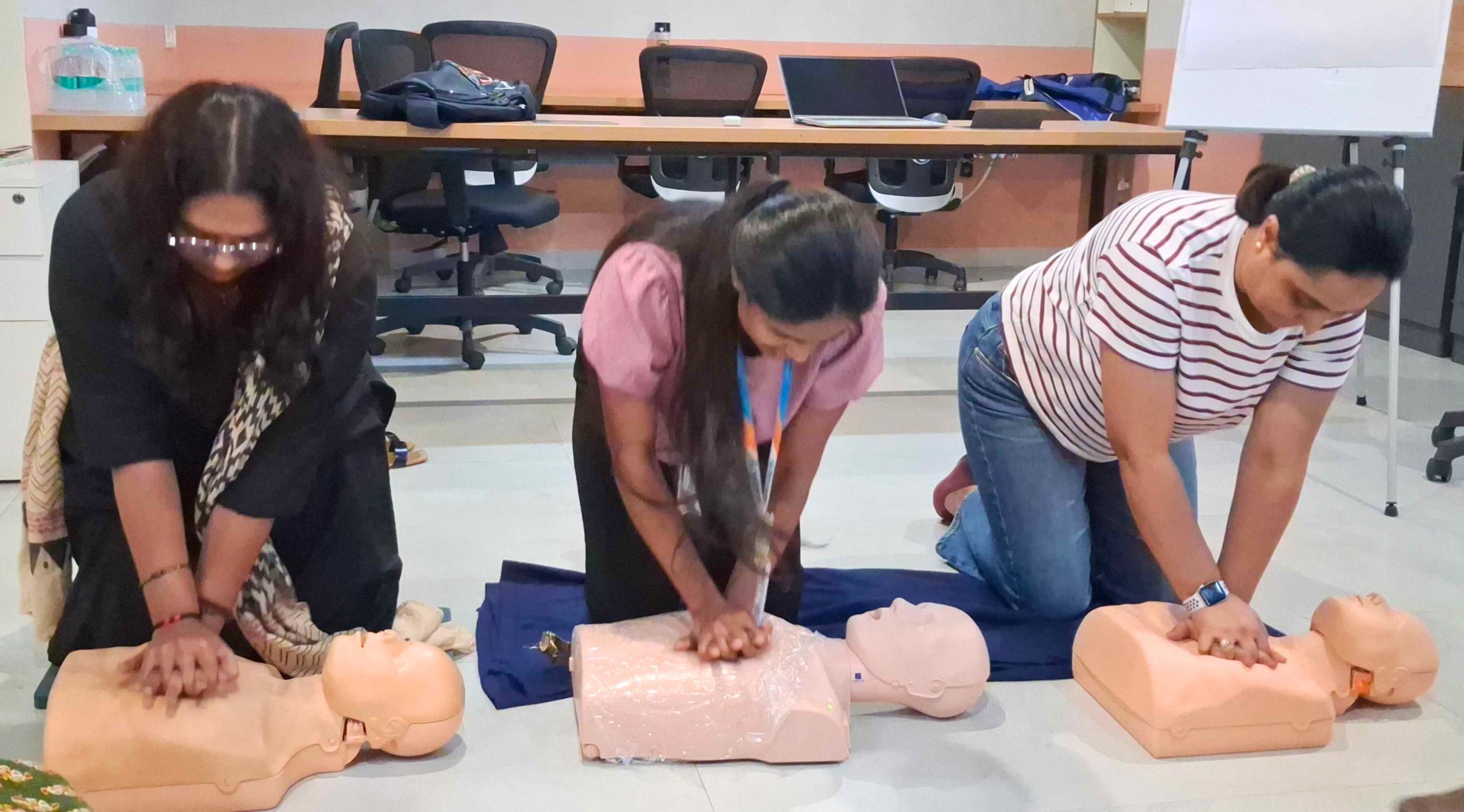
Knowing the steps is one thing. Performing them under pressure is another. That is why the session ended with live demonstrations and practice.
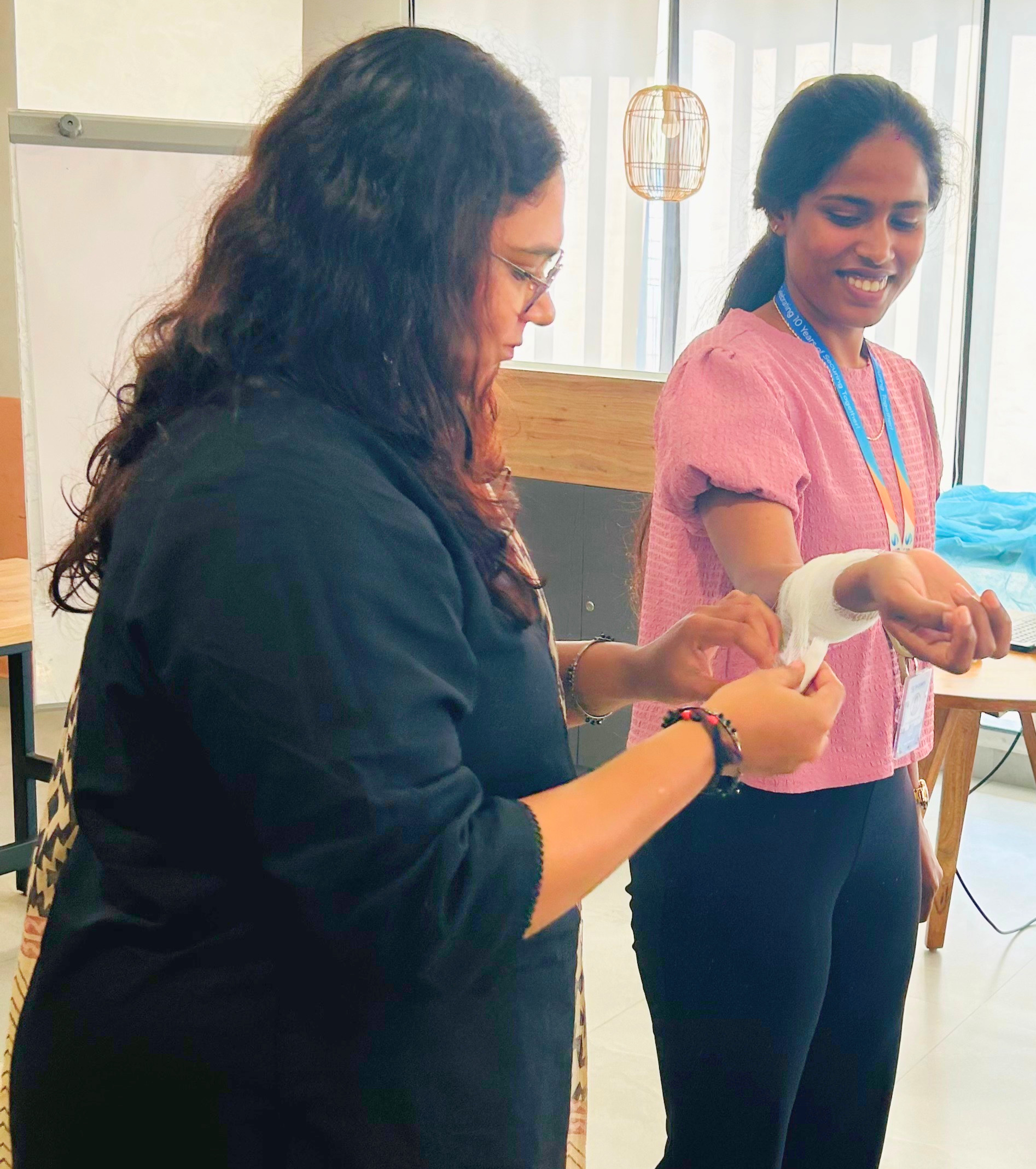
Employees practised CPR techniques, learning the correct hand position, the depth and rhythm of chest compressions, and when to keep going. They also practised bandaging methods for different types of wounds and injuries. Trying these skills firsthand built the muscle memory and confidence that a real emergency demands.
“The First Aid Preparedness Training was a very informative and valuable experience. It helped me understand how to respond confidently and responsibly during medical emergencies. The hands-on CPR and bandaging sessions were particularly useful. Overall, it was a great initiative by Sacumen that equipped us with essential skills to help save lives when every second counts.” – Akshatha Raj
“The CPR awareness session showed me how much difference a few calm, correct actions can make in an emergency. Practising the steps hands-on built my confidence to step in rather than stand by. I’m grateful to the company for investing in training that goes well beyond the workplace.” – Pradeep Mathew
Prepared at Work, Confident Everywhere
With this training, Sacumen now has a prepared team ready to step in the moment an emergency strikes at the office. Employees know what to do, what to avoid and how to keep a patient safe until professional help arrives.
The benefits also go beyond the workplace. The same skills travel with employees to their homes, their commutes and their communities, so they can respond with confidence wherever someone needs help.
By investing in its employees’ ability to protect one another, Sacumen has taken another step forward in building a safe, caring and resilient workplace.
Want to grow with an organization that invests in its people? Explore careers at Sacumen.
Disclaimer: This article is intended for general awareness only. It is not a substitute for certified first-aid training or professional medical advice. In an emergency, always call 112 or 108 for immediate help.
– Written by: S Sumedha
Other Blogs