- Home
- Blog
- Expanding Your Incident Response (IR) Platform’s Value with Integrations into SIEM, EDR, and Threat Intelligence Tools
Expanding Your Incident Response (IR) Platform’s Value with Integrations into SIEM, EDR, and Threat Intelligence Tools
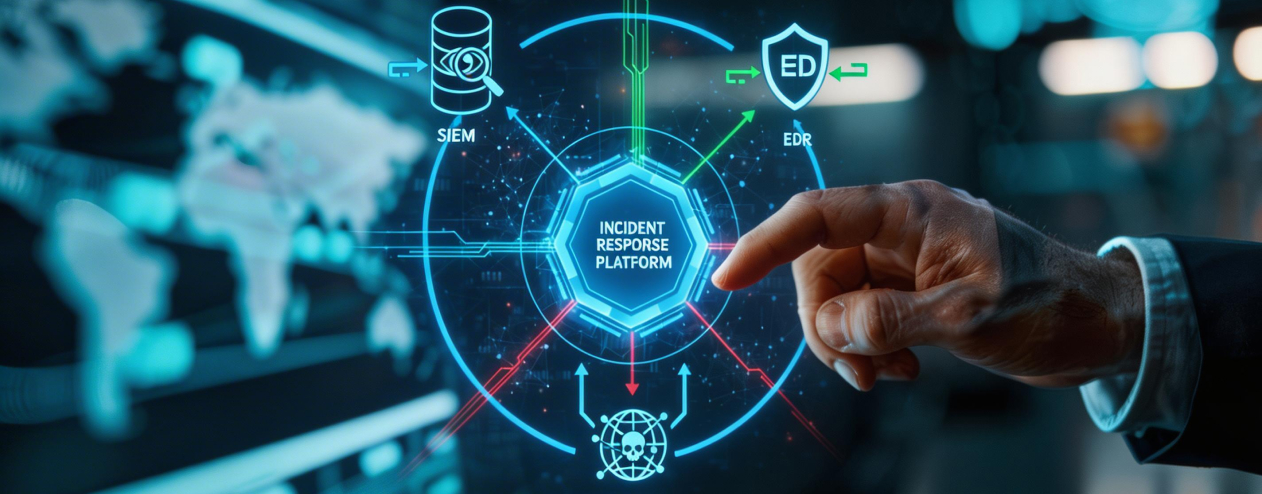
An Incident Response (IR) platform is the nerve center of modern security operations, designed to detect, investigate, and resolve cybersecurity incidents efficiently. It orchestrates workflows, standardizes processes, and ensures that incidents are addressed systematically.
However, today’s cybersecurity ecosystem is crowded with specialized tools — SIEM for log analysis, EDR for endpoint protection, and Threat Intelligence platforms for contextual insights. While powerful individually, these tools often operate in silos. This disconnect leads to delayed detection, fragmented investigations, and slower response times.
Integrating your IR platform with SIEM, EDR, and Threat Intelligence tools can transform it from a reactive system into a proactive, intelligence-driven, and context-rich powerhouse — enabling your security team to act faster, smarter, and with greater precision.
Why Integrations Matter for Incident Response?
Modern cyberattacks unfold in minutes, not days — yet many incident response workflows still rely on manual processes that slow down action. Integrations solve this challenge by:
- Centralized Data Access – Bringing all security alerts, logs, and events into one interface for faster analysis.
- Automated Actions – Streamlining repetitive tasks like alert triage, ticket creation, and containment actions.
- Reduced Manual Coordination – Minimizing the need for constant communication between different teams and tools.
- Real-Time Context – Enriching incidents with actionable intelligence to improve accuracy and decision-making.
Integrating IR Platforms with SIEM.
Security Information and Event Management (SIEM) tools like Splunk, IBM QRadar, and Azure Sentinel collect and analyze security events across the network. When integrated with an IR platform, the synergy delivers:
- Unified Visibility – Ingest SIEM alerts directly into the IR dashboard for single-pane-of-glass monitoring.
- Faster Triage – Correlate logs and events from multiple systems to pinpoint genuine threats quickly.
- Automated Playbooks – Trigger predefined response workflows based on SIEM alerts, eliminating the need for analyst intervention in routine cases.
- Compliance & Reporting – Combine SIEM’s detailed logging with IR workflows for simplified, audit-ready reports.
The result? Analysts spend less time jumping between consoles and more time mitigating real threats.
Integrating IR Platforms with EDR.
Endpoint Detection & Response (EDR) solutions like CrowdStrike Falcon, SentinelOne, and Carbon Black monitor and protect endpoints — the frequent entry point for cyberattacks. Integrating them with your IR platform enables:
- Endpoint Context – Connect incident alerts to granular endpoint activity logs for deeper insights.
- Containment at Speed – Automatically isolate compromised endpoints without leaving the IR interface.
- Advanced Threat Hunting – Leverage EDR telemetry to investigate root causes and detect stealthy attacks.
- Cross-Tool Correlation – Merge endpoint data with SIEM and network events for comprehensive incident views.
This ensures that endpoint compromises are detected, contained, and resolved in minutes, not hours.
Integrating IR Platforms with Threat Intelligence Tools.
Threat Intelligence tools like MISP, Recorded Future, and Anomali provide critical context that turns raw alerts into actionable incidents. Integrated with your IR platform, they offer:
- Enrichment with IOCs – Automatically append IP addresses, domains, and file hashes with reputation scores.
- Predictive Defense – Spot attack patterns early and take preventive action.
- Faster Attribution – Match incidents to known threat actor profiles for targeted countermeasures.
- Reduced False Positives – Filter out low-value alerts based on verified intelligence.
By enriching every alert with real-time threat intelligence, analysts can prioritize high-impact threats and respond more decisively.
Real-World Example Scenarios.
- Phishing Attack Automation – A phishing alert in SIEM triggers the IR platform to initiate EDR endpoint scans and isolate compromised devices instantly.
- Endpoint Anomaly Investigation – Suspicious process activity detected by EDR is enriched with threat intelligence data, revealing it matches a known malware family.
- Firewall-Intel Fusion – A threat intel feed flags a malicious IP found in firewall logs, automatically creating an IR incident with a recommended response playbook.
These scenarios illustrate how integrations create a faster, intelligence-driven response loop.
How Sacumen Adds Value!
We specialize in building custom API-based integrations between Incident Response platforms and security tools such as SIEM, EDR, and Threat Intelligence solutions. Our expertise includes seamless integrations with leading platforms like Splunk, Microsoft Sentinel, CrowdStrike Falcon, Palo Alto Cortex XSOAR, MISP, Recorded Future, and more. With an exclusive focus on cybersecurity, we bring deep domain expertise and adhere to industry-leading security best practices. This proven approach reduces integration timelines while ensuring high performance, scalability, and reliability.By connecting your IR platform with the rest of your security stack, we help you achieve faster MTTR, higher efficiency, and greater ROI from your existing tools.
Conclusion.
Integrating your Incident Response platform with SIEM, EDR, and Threat Intelligence tools bridges the gap between detection, investigation, and resolution. It empowers your team to act faster, make informed decisions, and maximize the value of every security investment.
Ready to expand your IR platform’s capabilities? Partner with Sacumen to unlock the full potential of integrations and take your incident response strategy to the next level.
Other Blogs