Bridging CRM Tools and Threat Intelligence Platforms: How Integration Boosts Security

The cybersecurity threat landscape is expanding at an unprecedented rate, with attackers exploiting every possible entry point. As threats become more sophisticated, cybersecurity products must go beyond detection—they must deliver fast, contextualized, and proactive responses. This is where CRM Platforms/Tools play a pivotal role. Traditionally used for managing customer relationships, CRM systems can become powerful security assets when integrated with Threat Intelligence Platforms (TIPs). In this blog, we explore how bridging CRM tools and TIPs enables faster threat detection, deeper incident insights, and stronger customer trust—transforming security from a reactive function into a strategic advantage for cybersecurity product companies.
How CRM Platforms Are Shaping the Future of Cybersecurity Products?
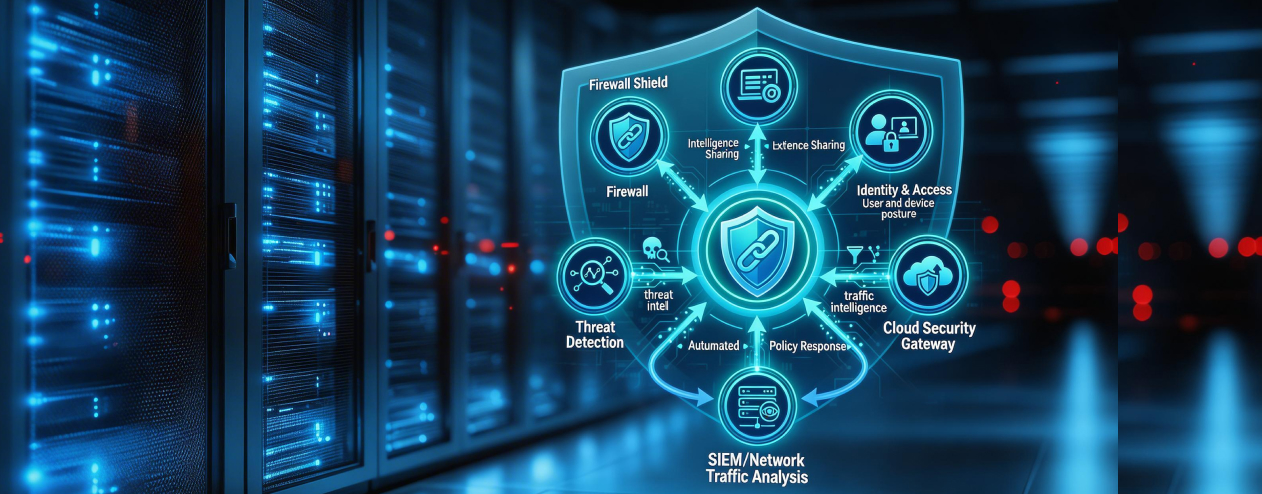
In the past, CRM systems were siloed from core security operations, serving purely as relationship management tools. But with today’s complex threat environment, that separation limits efficiency and response speed. Integration between CRM platforms and security systems ensures that customer and partner interactions are not only tracked but also evaluated for potential risks. By linking CRM data with real-time threat intelligence, cybersecurity products gain a holistic view of each account’s security posture. This allows for more accurate threat prioritization, faster containment, and a proactive approach to safeguarding sensitive information. For CTOs, CEOs, and VPs of cybersecurity companies, CRM integration is no longer a convenience—it’s a competitive necessity.
Integrating CRM and Threat Intelligence for Proactive Security.
- Faster Threat Detection
Threat indicators from the TIP instantly flag suspicious customer or partner activities inside the CRM, enabling potential breaches to be identified in minutes—not hours or days—drastically reducing the attacker’s window of opportunity. - Context-Rich Incident Analysis
CRM records add business context—customer history, transaction patterns, account importance—to TIP alerts, allowing security teams to prioritize incidents based on actual business impact, ensuring resources are focused on the threats that matter most. - Automated Risk Response
High-risk accounts are automatically tagged or isolated in the CRM, triggering incident response workflows so containment begins immediately and actions are carried out swiftly and consistently without manual delays. - Improved Threat Correlation
Data from CRM interactions is cross-referenced with known attacker profiles in the TIP, enabling faster identification of targeted campaigns and repeated attack patterns so teams can anticipate and counter future moves. - Stronger Customer Trust
Customers see visible, proactive measures—such as preemptive account protection and rapid incident updates—which enhance brand reputation and reinforce confidence that their security is a top priority. - Data-Driven Security Decisions
Integrated dashboards combine threat feeds with customer relationship data, giving leadership a real-time, 360° view of risk across the customer base to guide strategic decisions that align security investments with business goals.
CRM Integration Hurdles for Cybersecurity Products — and the Road to Resolution.
One of the biggest hurdles in CRM integration for cybersecurity products is data compatibility—ensuring that threat intelligence feeds align with CRM data structures. Without proper mapping and normalization, valuable signals may be lost or misinterpreted. Security concerns are another challenge; poorly implemented integrations can create vulnerabilities instead of closing them. Scalability also plays a role—many integrations struggle to handle growing data volumes without impacting performance. To overcome these challenges, cybersecurity companies should adopt an API-first approach with strong authentication protocols, encryption in transit and at rest, and strict role-based access controls. Leveraging middleware or specialized integration partners can ensure seamless data transformation, reduce latency, and maintain compliance. Ultimately, the right approach transforms integration from a technical hurdle into a strategic enabler.
Sacumen’s Approach to Seamless CRM Integration for Product Companies.
Sacumen specializes in building custom integrations with leading CRM Platforms/Tools exclusively for cybersecurity products. With experience across multiple Threat Intelligence Platforms, Sacumen delivers integrations that are tailored, secure, and performance-driven. Our approach combines Tailored Integration for Your Ecosystem, Secure Scalable Architecture, Real-Time Threat–Customer Linkage, Automation for Faster Incident Handling, Performance and Reliability, and Reduced Development Burden. By handling the entire lifecycle—from design and development to testing and deployment—we ensure faster go-to-market, enhanced product capability, and minimal in-house effort for our clients. The result is a robust, scalable integration that strengthens security outcomes and maximizes product value.
Other Blogs